10 Outdoor Sports That Keep Kids Active
Indian children today spend an average of four to six hours daily on screens — a number that has nearly doubled since 2019. Meanwhile, outdoor play time has dropped to less than 45 minutes per day for most urban children. The World Health Organisation recommends that children aged 5-17 get at least 60 minutes of moderate to vigorous physical activity every day, yet studies show that fewer than 30 percent of Indian children meet this guideline. The consequences are visible: rising childhood obesity, increasing rates of myopia, and growing mental health concerns among young people. The solution does not require expensive gym memberships or elite coaching — it starts with getting kids outside and moving. Here are ten outdoor sports perfectly suited for Indian children, with practical advice on getting started with each one.
1. Cricket: India's Beloved Game
No list of Indian sports would be complete without cricket. It is played in every gully, park, and open ground across the country, making it the most accessible team sport for Indian children. Cricket develops hand-eye coordination, strategic thinking, teamwork, and patience. It also teaches children to handle both success and failure gracefully — a valuable life lesson.
Getting started is affordable. A basic Kashmir Willow bat costs ₹600 to ₹1,500, a set of plastic stumps runs ₹200 to ₹500, and a tennis ball costs just ₹30 to ₹50. For more serious play, a leather ball and proper batting pads and gloves will cost an additional ₹1,500 to ₹3,000. Most residential colonies and parks have enough space for a casual game, and cricket coaching academies are available in virtually every Indian city, with monthly fees typically ranging from ₹1,500 to ₹4,000.
2. Badminton: The Space-Efficient Sport
Badminton is the second most popular sport in India and arguably the most practical for urban families. It can be played in a relatively small space — a driveway, parking area, or small park — and requires minimal equipment. The sport develops exceptional reflexes, agility, cardiovascular fitness, and hand-eye coordination.
A beginner racket costs ₹500 to ₹1,500, and a tube of six nylon shuttlecocks costs ₹150 to ₹300. A portable net set for home use runs ₹800 to ₹2,000. For structured training, badminton academies charge ₹2,000 to ₹5,000 per month. With PV Sindhu and Saina Nehwal as role models, badminton has become an aspirational sport for Indian girls in particular, which is a wonderful development for gender equity in sports.
3. Football: The Global Game Growing in India
Football is experiencing a renaissance in India, driven by the Indian Super League, increased television coverage of European leagues, and growing grassroots programmes. It is one of the best sports for overall physical development, building cardiovascular endurance, leg strength, agility, and spatial awareness. The teamwork and communication skills developed through football are exceptional.
The startup cost is minimal — a decent football costs ₹400 to ₹1,200, and a pair of football boots runs ₹800 to ₹2,500. Shin guards at ₹200 to ₹500 are recommended for organised play. Football coaching programmes are expanding rapidly across Indian cities, with monthly fees of ₹1,000 to ₹3,500. Many schools now have football programmes, making it easy for children to get involved.
4. Swimming: The Complete Exercise
Swimming is often called the perfect exercise because it works every major muscle group while being gentle on joints. It is also a critical life skill — drowning is a leading cause of accidental death among children in India, making swimming lessons a safety investment as much as a sporting one.
Swimming classes in India typically cost ₹2,000 to ₹5,000 per month, with most municipal and private pools offering structured programmes for children aged 4 and above. Essential gear includes a swimsuit (₹500-₹1,500), goggles (₹300-₹800), and a swim cap (₹150-₹400). Many apartment complexes now have pools, making regular practice convenient for urban families.
5. Cycling: Freedom on Two Wheels
Cycling is more than just exercise — it gives children their first taste of independence and exploration. It builds leg strength, cardiovascular fitness, balance, and spatial awareness. Regular cycling has also been shown to improve concentration and academic performance.
A quality children's bicycle costs ₹3,000 to ₹8,000 depending on size and brand. Hero, Firefox, and Hercules are reliable Indian brands. A helmet is non-negotiable and costs ₹500 to ₹1,500. Knee and elbow pads at ₹300 to ₹600 are recommended for beginners. Many Indian cities are developing cycling tracks and dedicated lanes, making cycling safer and more enjoyable. Weekend family cycling trips are an excellent way to combine exercise with quality family time.
6. Kabaddi: India's Indigenous Sport
Kabaddi is experiencing a massive revival thanks to the Pro Kabaddi League, and it deserves a place in every Indian child's sporting experience. This indigenous sport requires no equipment at all — just an open space and willing participants. It develops breath control, agility, strength, quick decision-making, and courage.
Kabaddi can be played on any flat surface, though a proper mat for competitive play costs ₹5,000 to ₹15,000 for clubs and schools. The sport is particularly valuable because it teaches children about Indian sporting heritage while providing an intense full-body workout. Kabaddi academies are growing in number, with monthly fees of ₹1,000 to ₹3,000, and many state sports authorities offer free or subsidised training programmes.
7. Athletics: Running, Jumping, and Throwing
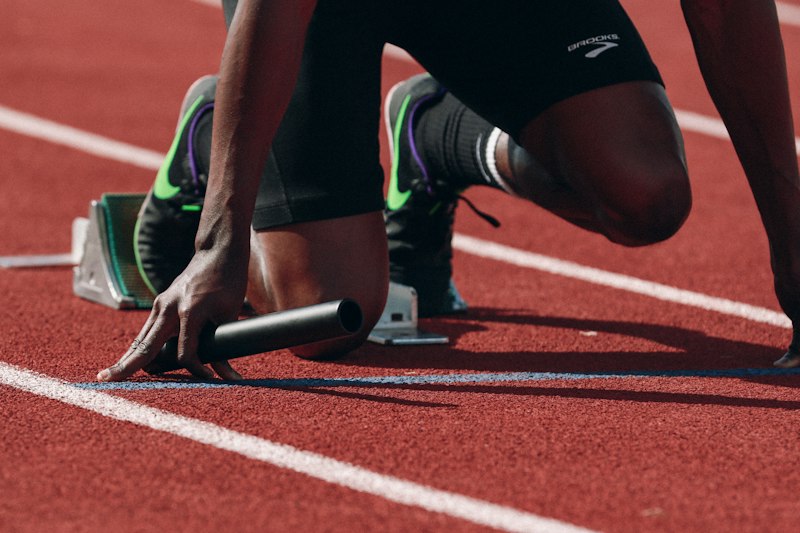
Track and field athletics form the foundation of all sports. Running, jumping, and throwing are the most natural physical activities for children, and structured athletics training develops speed, power, endurance, coordination, and discipline. India has a growing athletics culture, with Neeraj Chopra's Olympic gold medal inspiring a new generation.
Getting started requires nothing more than a pair of running shoes (₹1,000-₹3,000) and access to a park or track. Many schools and municipal stadiums offer athletics programmes. For more serious training, athletics academies charge ₹1,500 to ₹4,000 per month. The beauty of athletics is that it accommodates every body type — sprinters, distance runners, jumpers, and throwers all find their niche.
8. Table Tennis: Fast Hands, Sharp Mind
While technically an indoor sport, table tennis is included here because many Indian families set up tables in gardens, verandas, and covered outdoor spaces. It develops lightning-fast reflexes, hand-eye coordination, strategic thinking, and mental agility. The sport is also excellent for children who may not enjoy team sports, as it can be played one-on-one.
A recreational table tennis table costs ₹5,000 to ₹15,000, while a quality bat costs ₹500 to ₹2,000. Many residential complexes and community centres have tables available for free use. Table tennis coaching is available in most cities at ₹1,500 to ₹3,500 per month. The compact nature of the sport makes it ideal for Indian urban settings where space is limited.
9. Skating: Balance and Confidence
Roller skating and inline skating are gaining popularity among Indian children, with skating rinks and parks appearing in cities across the country. Skating develops exceptional balance, core strength, leg power, and confidence. It is also one of the few sports where children can see rapid improvement, which keeps motivation high.
A beginner inline skate set costs ₹1,500 to ₹4,000, with brands like Jaspo, Cosco, and Nivia offering reliable options. Safety gear including helmet, knee pads, elbow pads, and wrist guards costs an additional ₹800 to ₹2,000. Skating classes are available in most cities at ₹1,000 to ₹2,500 per month. Many parks and residential areas have smooth surfaces suitable for skating practice.
10. Kho-Kho: Speed and Strategy
Kho-Kho is another traditional Indian sport that provides an incredible workout while connecting children to their cultural heritage. It requires no equipment, can be played with large groups, and develops speed, agility, quick thinking, and teamwork. The sport is played in most Indian schools and has a well-established competitive structure at state and national levels.
The only requirement is a flat playing surface of approximately 29 by 16 metres. Kho-Kho is particularly valuable in school settings because it accommodates large numbers of players simultaneously, ensuring everyone gets to participate. State-level Kho-Kho associations offer training programmes, and the sport is included in the Khelo India programme, providing pathways for talented young athletes.
Tips for Getting Your Child Into Outdoor Sports
Start early but keep it fun. Children aged 3-6 should focus on free play and basic movement skills rather than structured sport training. Organised coaching can begin around age 6-7 for most sports.
Let your child choose. Forcing a child into a sport they dislike is counterproductive. Expose them to multiple sports and let their natural interests guide the decision. Many children will try several sports before finding the one that clicks.
Invest in safety gear before performance equipment. A good helmet, proper shoes, and appropriate protective gear are more important than an expensive bat or racket. Safety builds confidence, and confident children enjoy sports more.
Be a role model. Children whose parents are physically active are significantly more likely to be active themselves. Join your child for a game of badminton, go cycling together, or simply play catch in the park. Your participation matters more than any coaching programme.
Do not over-schedule. Children need unstructured outdoor play time as much as they need organised sports. Free play develops creativity, social skills, and self-directed problem-solving in ways that structured coaching cannot.
Conclusion
The best sport for your child is the one they enjoy enough to keep doing. Whether it is cricket in the gully, badminton in the driveway, or kabaddi in the park, regular physical activity will improve their health, boost their confidence, enhance their academic performance, and teach them life skills that no classroom can provide. The equipment costs are modest, the benefits are enormous, and the memories of childhood sports last a lifetime. Turn off the screen, step outside, and let the games begin.
Written by the NS Sports and Toys team. Toy and sports equipment retailer based in Gurgaon, India.