Why Play Matters — The Science of Play
Indian parents face a peculiar pressure. Academic achievement is celebrated, coaching classes start early, and childhood can feel like a serious production schedule. In all this, something fundamental often gets lost: play. And the research on play is unambiguous — it is not a distraction from learning or preparation for future success. Play is how children actually develop, and the evidence spans neuroscience, psychology, and decades of longitudinal studies. This article pulls together what the science says about play, identifies the main types, and gives practical suggestions for encouraging each in an Indian family context.
What Science Says About Play
A 2018 clinical report by the American Academy of Pediatrics titled The Power of Play synthesised decades of research. The findings are remarkable. Play activates the brain's prefrontal cortex, which is responsible for executive functioning — planning, impulse control, and decision-making. Children who play regularly show measurable improvements in working memory, mental flexibility, and self-regulation.
Play also drives language development. A 2013 study in the journal Child Development found that pretend play significantly increases vocabulary acquisition, narrative thinking, and theory of mind — the ability to understand that others have thoughts and feelings different from one's own. Children who pretend-play regularly are better at perspective-taking and empathy, skills that correlate strongly with life success.
Perhaps most importantly, play reduces stress. Unstructured play increases levels of brain-derived neurotrophic factor (BDNF), a protein that supports neuron growth and resilience. In a world where Indian children face mounting academic pressure, play is not a luxury — it is biologically essential for healthy development.
Physical Play — The Body Is the Brain
Physical play includes running, jumping, climbing, balancing, and rough-and-tumble games. Beyond the obvious benefits to physical health, physical play builds critical neural pathways related to motor coordination, spatial awareness, and risk assessment.
Rough-and-tumble play specifically — wrestling, chasing, play-fighting — is often discouraged by Indian parents worried about injuries. Yet research consistently shows that this kind of play is essential for developing emotional regulation and social calibration. Children learn what is too rough, how to read body language, and how to calm down when over-excited.
How to encourage physical play: Take children to parks regularly. Invest in simple equipment — a skipping rope (₹150), a hula hoop (₹250), a football (₹500), or a badminton set (₹800) is enough to turn any open space into a play zone. Encourage walking and cycling for short trips rather than driving. Embrace a little rough play, supervised but not over-policed, especially for boys who are often scolded for being boisterous.
For apartment dwellers with limited outdoor access, indoor physical play still matters. Jump ropes, yoga mats, indoor trampolines (₹3,500 to ₹8,000), and balance boards (₹800 to ₹2,000) all work in small spaces.
Imaginative and Pretend Play — The Workshop of the Mind
Imaginative play is where children rehearse the adult world. A girl pretending to be a doctor is not just playing — she is processing what doctors do, practicing empathy, organising sequences of events, and using language to narrate a world that does not exist.
A landmark 2015 study at the University of California found that children who engage in daily pretend play score significantly higher on measures of creativity and divergent thinking at age 10 than peers who do not. These abilities predict success in careers ranging from engineering to entrepreneurship.
Dress-up play, puppet shows, playing house, playing school, building with blocks and narrating stories about them — all these are forms of pretend play that deserve encouragement.
How to encourage imaginative play: Keep a dress-up box. Old sarees, scarves, hats, and cast-off clothes are gold. A doctor kit (₹400), a toy kitchen (₹1,500 to ₹2,500), or a shopkeeper play set (₹600 to ₹1,200) are excellent investments. Open-ended toys like blocks, figurines, and soft toys support pretend play better than toys with fixed functions.
Most importantly, do not over-script. Resist the urge to direct the play or correct the fantasy. If the elephant is the mother and the car is the father, roll with it. The whole point is for children to drive the narrative.
Social Play — The Playground Is a Classroom
Social play is play with other children, from parallel play in toddlers to complex cooperative games in older kids. Research shows that social play is the primary arena where children learn negotiation, conflict resolution, turn-taking, cooperation, and leadership.
A 2016 study published in Early Childhood Education Journal followed 500 children from age 4 to 14 and found that the strongest predictor of social and emotional competence in adolescence was the quantity of unstructured social play in early childhood — more predictive than structured extracurricular activities.
How to encourage social play: Arrange regular playdates. This is not optional — it is as important as homework. In Indian cities, where apartment living and demanding school schedules can isolate children, parents need to be deliberate about creating opportunities for peer interaction.
Group sports like cricket, football, or kabaddi develop teamwork. Community activities, building societies' common areas, and park regulars create natural social networks. Board games played with cousins during family gatherings are pure social play gold — no screen, lots of negotiation, and plenty of laughter.
Allow children to resolve their own conflicts wherever safely possible. Jumping in to referee every disagreement robs them of the exact social-learning opportunities that social play provides.
Constructive Play — Building, Making, Creating
Constructive play is about making things. LEGO, blocks, sandcastles, collages, origami, forts made of sofa cushions — all are forms of constructive play. This type of play develops planning skills, spatial reasoning, fine motor control, and creative problem-solving.
A 2008 study in the journal Psychology of Music found that children who engaged in regular constructive play before age 8 performed significantly better on mathematics tests through high school. Construction teaches mathematical thinking in a concrete, embodied way that abstract worksheets cannot match.
How to encourage constructive play: Keep a good supply of building materials accessible. LEGO Duplo for toddlers, LEGO Classic for older kids, Mega Bloks, Mechanix kits, art supplies, cardboard boxes, and tape should all be within reach. The single best construction material in most Indian homes is the unwanted Amazon cardboard box — never throw them all away.
Invite children to build things for real purposes. A blanket fort for reading, a bird feeder for the balcony, a homemade greeting card for a grandparent. Purpose elevates constructive play from idle activity to meaningful creation.
Nature Play — The Forgotten Fifth Type
Time spent playing outdoors in natural settings is increasingly recognised as its own category of play with distinct benefits. Research from the UK's Natural Childhood Inquiry found that regular nature play improves attention, reduces symptoms of anxiety and depression, and builds environmental awareness.
Indian children today spend markedly less time in nature than previous generations. With shrinking parks, growing traffic, and demanding screen-based entertainment, getting kids outdoors requires intention.
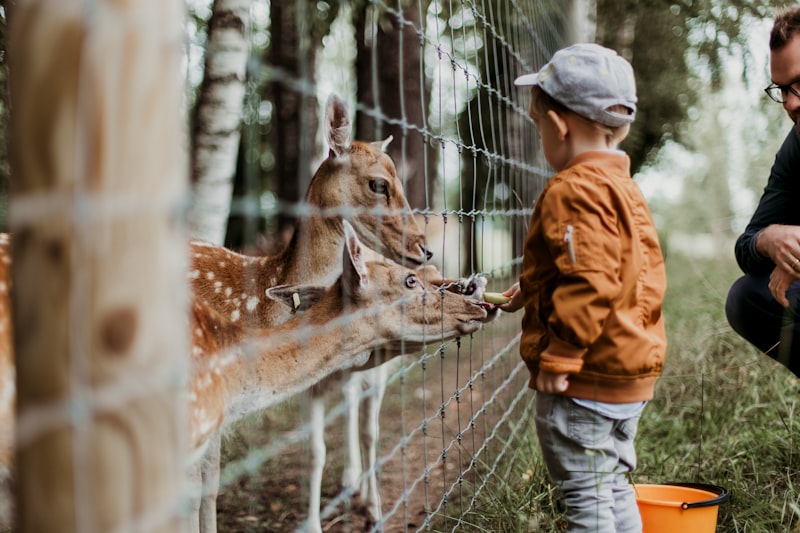
How to encourage nature play: Plan regular outings to parks, forests, beaches, or any green space. Let children explore freely rather than following designated paths. Encourage hands-on interaction — digging, climbing, splashing in puddles during safer parts of monsoon, collecting leaves and stones. A simple magnifying glass (₹150) and a small notebook can turn any neighbourhood walk into a nature expedition.
If you have even a small balcony or terrace, a few potted plants that children tend themselves teach patience and natural cycles. A dried seed planted in January and sprouting in February is pure developmental magic.
How Much Play Is Enough
The simple answer from paediatric research is that children aged 3 to 12 need at least one hour of active unstructured play daily, plus additional imaginative, constructive, and social play throughout the day. That may sound like a lot, but much of it happens naturally if you resist over-scheduling and allow genuine free time.
For a typical Indian school-going child, that means resisting the urge to fill every evening with tuition, classes, and practice sessions. A child with one or two structured activities plus ample free play time tends to do better academically, socially, and emotionally than one booked solid from morning to bedtime.
The Role of Screens
Screen time is not inherently bad, but it is not play in the developmental sense. Passive video watching and many mobile games do not engage the brain systems that true play activates. The World Health Organisation recommends no screens for children under 2, and no more than one hour of screen time for children aged 2 to 5.
Use screens deliberately — as reward, as family entertainment, or as occasional educational supplement — rather than as the default activity. A family that chooses board games over Netflix on rainy afternoons is not depriving children of fun; it is investing in their development.
Practical Tips for Busy Indian Parents
Protect unstructured time. Block out play hours the same way you block out homework time. If it is not on the schedule, it will be eaten by something else.
Resist over-scheduling. One or two structured activities a week is enough for most children under 10. Fill the rest with play.
Play with your children. Twenty minutes of joint play with a present, non-distracted parent has enormous developmental value. Put the phone away, sit on the floor, and join the game.
Build a play-ready home. Accessible toys, a corner for art, a box of dress-ups, and books within reach all invite play spontaneously.
Conclusion
Play is not the opposite of learning. Play is learning, neurologically, socially, and emotionally. The Indian parent who carves out space for daily unstructured play — physical, imaginative, social, constructive, and natural — is doing something just as important as paying for tuition or coaching classes. In fact, the research suggests they are doing something more important. Children who play well grow into adults who think flexibly, cooperate gracefully, and face uncertainty with courage. And those qualities, not the syllabus of class 5, are what determine a life well lived.
Written by the NS Sports and Toys team. Toy and sports equipment retailer based in Gurgaon, India.